

Return of the Lined Seahorses
March 30, 2026
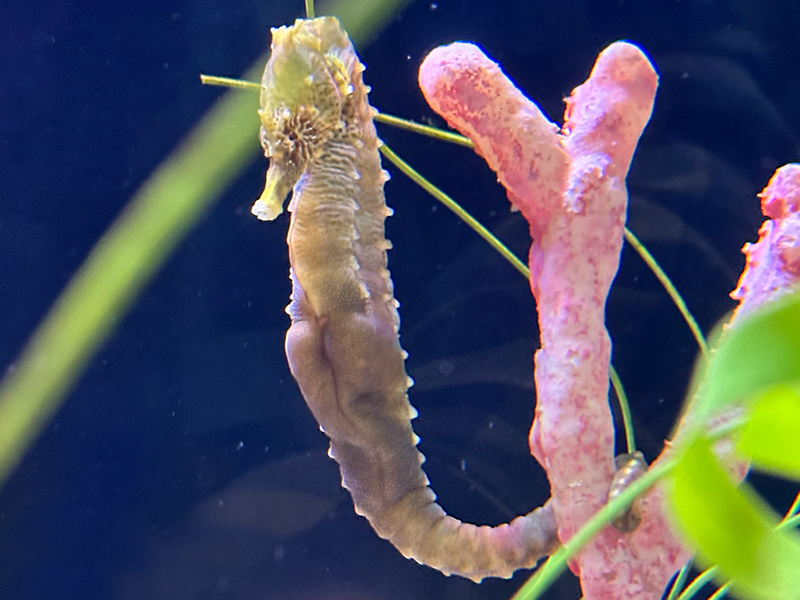
If you’re a visitor looking for a moment of Zen, stop by the Museum’s Animals of the Eelgrass exhibit (NEC 1st floor) and check out the lined seahorses, now back on display after a tank refresh. Be patient as you look for them. They’re not all that small (2-4 inches) but they can be surprisingly difficult to find.
Fast Facts
Lined seahorses are one of two species (along with longsnout seahorses) native to North Carolina waters and are found in the Atlantic Ocean from Cape Cod in the north to Argentina in the south as well as west in the Gulf of Mexico.
They’re weak (but entertaining) swimmers that use camouflage as a primary defense against predators, but their ability to change color and their namesake lines serve them well as they cling to aquatic vegetation including mangroves, seagrasses, sponges, corals, and floating sargassum.
They don’t have scales like other fish (yes, they are a type of fish) but have an exoskeleton covered in hard, bony plates that serve as a deterrent to predators, while remaining flexible enough to allow its prehensile tail to cling to objects in their environment.
They don’t have teeth, so they just suction up their food — small shrimp, very small fish and plankton — and swallow it whole.
Probably the most astounding fact is that males carry and birth the babies. First the female transfers between 250-650 eggs to the brood pouch of the male who then seals and fertilizes the eggs. After around three weeks the embryos hatch inside the pouch but stay until they can swim, then the male releases the baby seahorses into the surrounding water.
For more information about our upcoming activities, conservation news and groundbreaking research, follow @NaturalSciences on Instagram and Facebook.