

Meet the Marbled Godwit
December 15, 2025
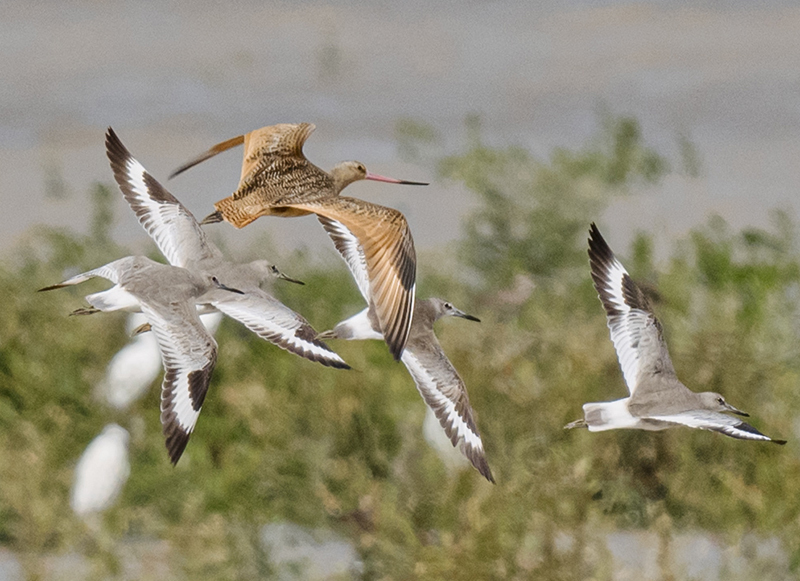
With cinnamon-colored feathers, a long, upturned bill and a curious name, the marbled godwit is distinctive in many ways. And when Museum ornithologist Dr. Brian O’Shea and colleagues spotted a small number of these birds during January fieldwork it wasn’t just cool, it was significant.
In a new paper published in the Journal of Caribbean Ornithology, O’Shea and colleagues report the first observations of the marbled godwit in Suriname, French Guiana and Guyana. These records expand the known distribution of the species on the north coast of South America. “We were thrilled to find these birds,” O’Shea says.
The coasts of these three countries — bordered by Brazil to the south and the Atlantic to the north — make up one of the most important areas for migratory shorebirds in the Americas. But there are many emerging challenges in the region that will require global cooperation to address. The rapid expansion of offshore oil drilling in Guyana (and soon Suriname) threatens to disrupt the delicate ecology, rising sea levels wash away the mudflats and mangrove forests that shorebirds depend on, even shorebird hunting, despite being illegal, takes a disheartening toll.
O’Shea’s research on marbled godwits and other shorebirds has spawned conservation partnerships geared toward fostering appreciation of these remarkable birds across cultures and providing them with safe havens as they traverse the hemisphere each year. His January survey was part of a broader effort to establish a shorebird reserve along the eastern coast of Guyana and the area where he found the godwits was in the core of a proposed reserve zone — a vast mud bank that has been known to host up to 100,000 shorebirds at a time.
“Publishing our observation of marbled godwits in the Guianas,” O’Shea adds, “has allowed us to again highlight this extraordinary region and its importance for shorebirds, climate resilience and global conservation.”
For more information about our upcoming activities, conservation news and groundbreaking research, follow @NaturalSciences on Instagram and Facebook.