

Expanding the Reach of (Turtle) Leeches
February 16, 2026
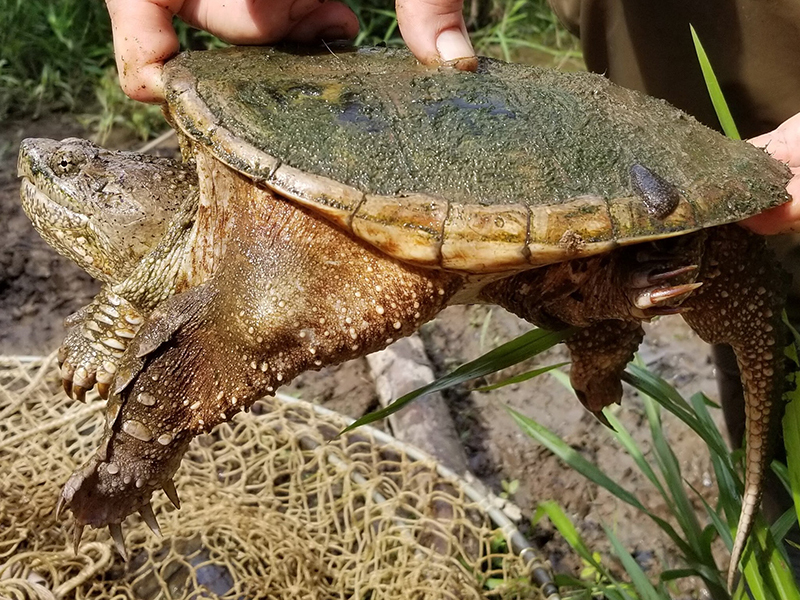
If you look close enough at the shell of a turtle, you might discover something you didn’t expect. Placobdella ali is a species of North American leech known to parasitize freshwater turtles, most often the common snapping turtle. The species was originally described in 2007 from specimens collected at Silver Mine Lake in New York and soon found in nearby southern New England and New Jersey.
A new study shows the species can be found in southern states as well, from North Carolina’s Turnipseed Nature Preserve to Georgia’s Dry Prong Creek, and elsewhere. In fact, study collaborators — including Head of the Museum’s Non-Molluscan Invertebrate Research Lab Dr. Bronwyn Williams — reported an expansion of the species’ known range by eight states, more than quadrupling its previously known distribution.
To accomplish this, Williams and colleagues re-examined museum specimens stored in the collections of the NC Museum of Natural Sciences and the National Museum of Natural History, some almost 100 years old. They pored through research-grade iNaturalist observations. They collected free-living leech specimens by hand from underneath submerged debris including branches, logs and leaves. They also collected leeches from living turtles, a popular source of blood meals for P. ali, through several years of extensive survey efforts in Wake County led by Dr. Ivana Mali’s research lab at NC State.
Abigail Conklin, a PhD student in Mali’s lab in the genetics and genomics program at NC State and lead author of the paper, points out that identifying such an expansion in range doesn’t mean these leeches suddenly dispersed to the south, it’s just that they weren’t described until 2007. So reclassification of previously collected specimens, as well as a better-informed look at new specimens, were both in play.
But why study leeches at all? “We know that parasites play an important role in the ecosystem,” Conklin says. “We know they occur all over the planet and yet we know so little about them. We’ll never know unless we take the time to investigate.”
For more information about our upcoming activities, conservation news and groundbreaking research, follow @NaturalSciences on Instagram and Facebook.