

Meet the Carolina redhorse — a new species of fish in our state
April 13, 2026
If there truly is a sucker born every minute, why did it take so long to name this one?
North Carolina stands out along the Atlantic slope of the United States as a true biodiversity hotspot for sucker fish in the genus Moxostoma, which includes redhorses and jumprocks. Its waterways host 10 distinct species, more than any other state in the region.
In 1961, the first known specimen of what became commonly known as a Carolina redhorse was collected by staff of the North Carolina Wildlife Resources Commission from Mill Creek in the Yadkin-Pee Dee River basin. Dr. Robert Jenkins — a long-time professor at Roanoke College also known as “Dr. Redhorse” for his extensive knowledge of the genus — recognized these fish were likely a separate species. But after decades of robust data collection, Jenkins passed away before making it official.
In a paper recently published by the journal Zootaxa, a group of scientists have completed the task of describing the Carolina redhorse and bestowing its Latin scientific moniker of Moxostoma carolina. “I am thrilled that this beautiful North Carolina native finally has a name,” says Gabriela Hogue, lead author of the paper and Collections Manager of Fishes at the North Carolina Museum of Natural Sciences.
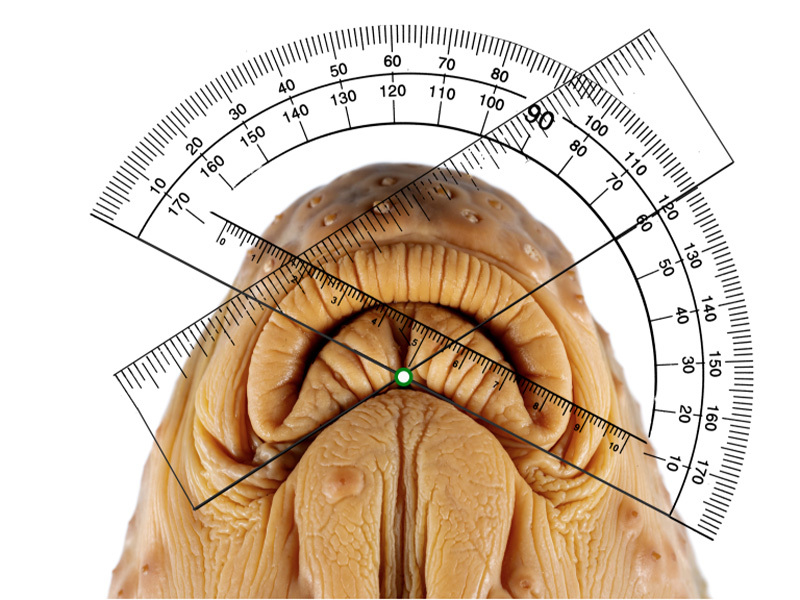
According to the paper, the Carolina redhorse is distinguished from all other species in the genus Moxostoma by the number of scales at the base of the tail (caudal peduncle), the texture and angle of the lower lip, and by pigmentation and skin nodule (tubercle) patterns. Finally, genetic testing on tissue samples from 48 Moxostoma individuals that are stored in the Museum’s collection — including 10 Carolina redhorse and all other Atlantic slope species — further verified the distinction.
The Carolina redhorse is rare and found locally in Piedmont streams and run-of-river reservoirs in North and South Carolina. The species’ common and scientific names are a nod to the fact that it is the only species of Moxostoma that only occurs in both North and South Carolina. Receiving a scientific name officially identifies the fish as an individual species, which is a critical step in the pursuit of funding for species conservation efforts. And since it is already listed as a Species of Greatest Conservation Need in both states, further research is warranted.
“There is still so much we don’t know about the Carolina redhorse,” adds Bryn Tracy, co-author and adjunct researcher with the Museum. “We need to understand its exact spawning behavior and timing, where juveniles spend their time, and get a clearer picture of its population size. Work on the Carolina redhorse by researchers is far from finished.”
For more information about our upcoming activities, conservation news and groundbreaking research, follow @NaturalSciences on Instagram and Facebook.